
Skip to content

Buckwheat: nutrition, cooking and gluten-free precautions

By Claire Mercier · Nutritionist, MSc10 min readPublished 09/14/2026
Sources
6
Validated claims
6
Dominant evidence
Limited
Freshness
09/14/2026
Buckwheat: nutrition, cooking and gluten-free precautions

Buckwheat is not wheat. It is the seed of a plant related to rhubarb, used like a cereal. That botanical distinction makes it useful for dietary variety, but it does not make every buckwheat pancake or noodle a miracle food. Its practical value comes from its versatility, fibre, minerals and plant compounds such as rutin. Human studies remain too varied to support therapeutic promises.

01

1. What exactly is buckwheat?

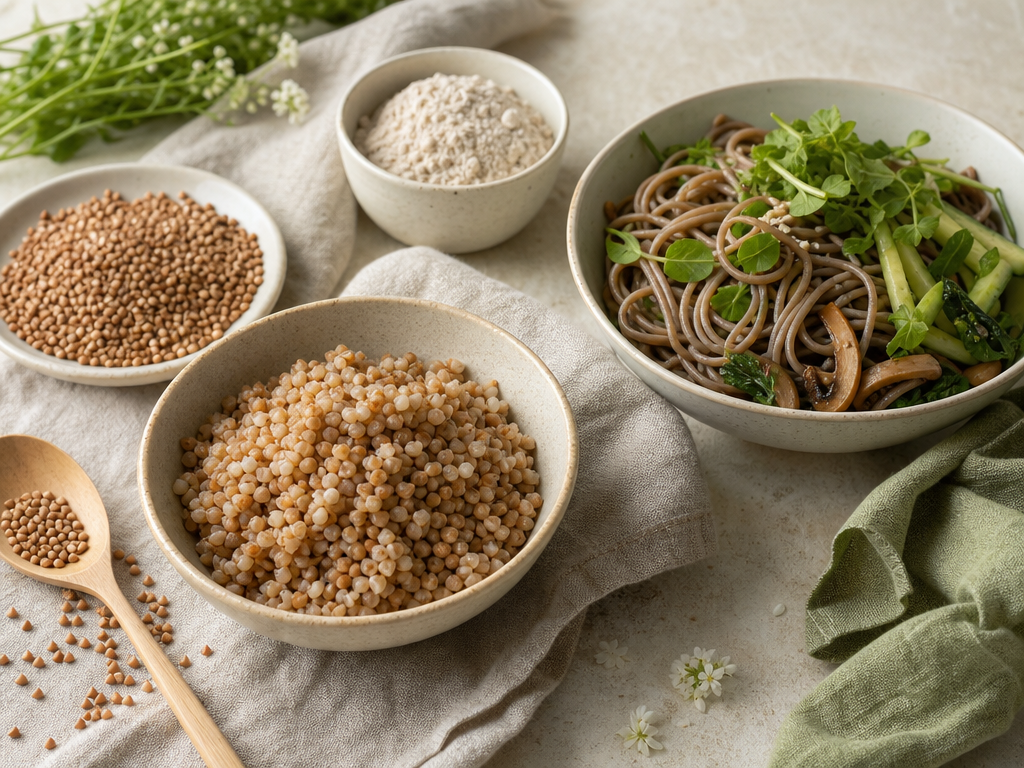
Buckwheat is sold as hulled groats, flour, flakes, tea and soba noodles. Common and Tartary buckwheat are the main food species. Raw and toasted groats taste different: toasting brings out a deeper flavour and a texture similar to rice.

“Pseudocereal” describes culinary use, not automatic nutritional superiority. Pure buckwheat is naturally gluten-free, but processed foods may contain wheat or cross-contact. If gluten avoidance is medically necessary, check the label on soba, bread and biscuits.

02

2. What a cooked portion provides

USDA FoodData Central lists about 92 kcal, 19.9 g carbohydrate, 3.38 g protein and 2.7 g fibre per 100 g of cooked roasted buckwheat groats. The same amount provides about 51 mg magnesium, 70 mg phosphorus, 88 mg potassium and 0.8 mg iron. These are reference values for one food entry, not a promise for every flour, noodle or recipe.

Water absorption, variety, milling and added ingredients change the result. A cheese galette, a groat salad and salty noodles are not interchangeable. Compare the serving you actually eat, fibre and sodium rather than relying on “superfood” language.

03

3. Fibre and digestion: what can be said

Buckwheat supplies fibre and starch, but fibre alone cannot predict digestive tolerance or microbiome changes. A systematic review of gastrointestinal health found 32 studies, including only two human interventions and three observational studies; most evidence came from animals or laboratory work. The authors judged human evidence limited.

In a crossover trial of adults with non-coeliac gluten sensitivity, buckwheat products were compared with a usual gluten-free diet. Some symptoms, including abdominal pain and bloating, were lower during one phase, but this does not show that buckwheat treats digestive sensitivity. An observational study linked high buckwheat noodle intake with more irritable-bowel-type symptoms; association is not causation.

04

4. Blood sugar and cardiovascular health

Buckwheat contains carbohydrate, fibre and polyphenols including rutin. Those features make it interesting nutritionally, not clinically proven. A 2018 meta-analysis included 15 human and 21 animal studies and reported lower fasting glucose in human trials, but heterogeneity was very high. Many studies were short or compared only with baseline.

A newer systematic review and meta-analysis included 16 human intervention trials with 831 participants; only eight studies and 464 participants entered quantitative analyses. Interventions lasted one to 15 weeks, samples were often small and 12 studies involved people with metabolic disturbances. The authors rated the evidence limited and highlighted risk of bias. No study established an effect on cardiovascular mortality or disease progression.

The useful conclusion is dietary: sometimes replacing a refined product with minimally processed groats can fit a varied diet. Buckwheat is not a treatment for diabetes, cholesterol or hypertension, and these trials do not establish a universal therapeutic dose.

05

5. How to prepare it

Rinse whole groats in a fine sieve. Dry-toasting for two or three minutes is optional and mainly changes flavour. Simmer until tender and drain if needed; water and timing vary, so follow the package first.

Use cooked groats in warm salads, with vegetables or in soup. Flour works in galettes, blini, breads and baking, but it does not behave exactly like wheat flour. Soba may be pure buckwheat or a wheat blend, so check the ingredients and gluten-free statement.

For a more complete meal, add vegetables, a protein food and a fat source according to your habits. That follows WHO’s principle of dietary diversity better than chasing one isolated ingredient.

06

6. Allergy and useful precautions

Buckwheat is different from wheat, but it can cause a genuine, sometimes severe allergy. A review estimated prevalence at 0.1–0.4% in some East Asian populations; those figures do not describe every country. Allergic proteins may remain reactive after cooking, so an allergic person must not assume cooked buckwheat is safe.

Hives, lip or throat swelling, breathing difficulty or collapse after eating require urgent medical care. People with a known allergy should follow their emergency plan and read labels. Flour can also expose someone during handling. Coeliac disease is different from buckwheat allergy: a product can be gluten-free and still be unsafe for someone allergic to buckwheat.

07FAQ

01Is buckwheat a cereal? Botanically no: it is a pseudocereal seed. In cooking it is used like a cereal.
02Is buckwheat always gluten-free? Pure seed is naturally gluten-free, but cross-contact or added wheat can occur in processed foods. Check the label.
03Is buckwheat better than rice or oats? There is no universal winner. Compare form, portion, fibre, sodium, taste and tolerance; variety matters more than rankings.
04Can I eat it every day? It can fit regularly if tolerated and if the overall diet remains varied. Allergy or a medical diet changes that answer.

Sources

Peer-reviewed studies and institutional references used for this article.

  1. 1WHO· 2026
    Official guidelineEstablished

    general population

    View source
  2. 2Tighe et al., Nutrients· 2023
    Systematic reviewLimited

    humans, animals and in vitro studies · 1563 participants

    View source
  3. 3Li et al., Nutrients· 2022
    Systematic reviewLimited

    adults; 831 participants across 16 trials · 831 participants

    View source
  4. 4Wieslander et al.· 2021
    Systematic reviewLimited

    populations with buckwheat allergy

    View source
  5. 5USDA FoodData Central· 2019
    Other sourceEstablished

    food composition database

    View source
  6. 6Li et al., Nutrients· 2018
    Meta-analysisLimited

    human and animal studies

    View source

Comments0 comments

No comments yet. Be the first to react.

Sign in to leave a comment. Sign in

By

Claire Mercier

Registered nutritionist focused on whole-food diets and metabolic health.

Related reading