Skip to content
Vitamin D: testing, intake and overdose

Vitamin D: testing, intake and overdose

25(OH)D testing, intake benchmarks, sun exposure, D2 versus D3, the real effect on fractures, and the 100 µg limit: understanding vitamin D without supplementing blindly.

3Sources
7Validated claims
EstablishedDominant evidence

AT A GLANCE

Before you dive in.

25(OH)D testing, intake benchmarks, sun exposure, D2 versus D3, the real effect on fractures, and the 100 µg limit: understanding vitamin D without supplementing blindly.

Explore the article

Vitamin D helps the body absorb calcium and maintain strong bones. But "lacking vitamin D" can cover very different situations: a lab result to interpret, low dietary intake, general prevention, or a deficiency to treat. Confusing them leads to over-interpreting a number or taking a high-dose supplement for no reason.

01

What a test measures

The blood test measures 25-hydroxyvitamin D, or 25(OH)D, which reflects intake and skin synthesis. According to the US academies cited by the NIH, deficiency risk rises below 30 nmol/L (12 ng/mL), and 50 nmol/L (20 ng/mL) or above is enough for most people. EFSA also uses 50 nmol/L as the target for setting its benchmarks.

Other professional societies use different thresholds, and a result should be read alongside age, season, intake, illnesses, treatments, and the reason for testing. Testing isn't routine screening to do every year for everyone: its relevance should be discussed with a professional.

02

Intake benchmarks, prevention, and prescription

EFSA proposes an adequate intake of 15 µg (600 IU) per day for adults, including during pregnancy and breastfeeding. The NIH recommends 15 µg up to age 70 and 20 µg (800 IU) beyond that. These are population-level benchmarks, not a prescription.

Three situations should be distinguished:

  • Nutritional reference: a benchmark for planning a diet.
  • Prevention: moderate supplementation can be discussed depending on age, season, and sun exposure.
  • Prescription: a documented deficiency, malabsorption, or bone disease calls for a dose, duration, and sometimes monitoring set by a professional.

A useful reminder for reading labels: 1 µg of vitamin D corresponds to 40 IU.

03

Diet and sun exposure

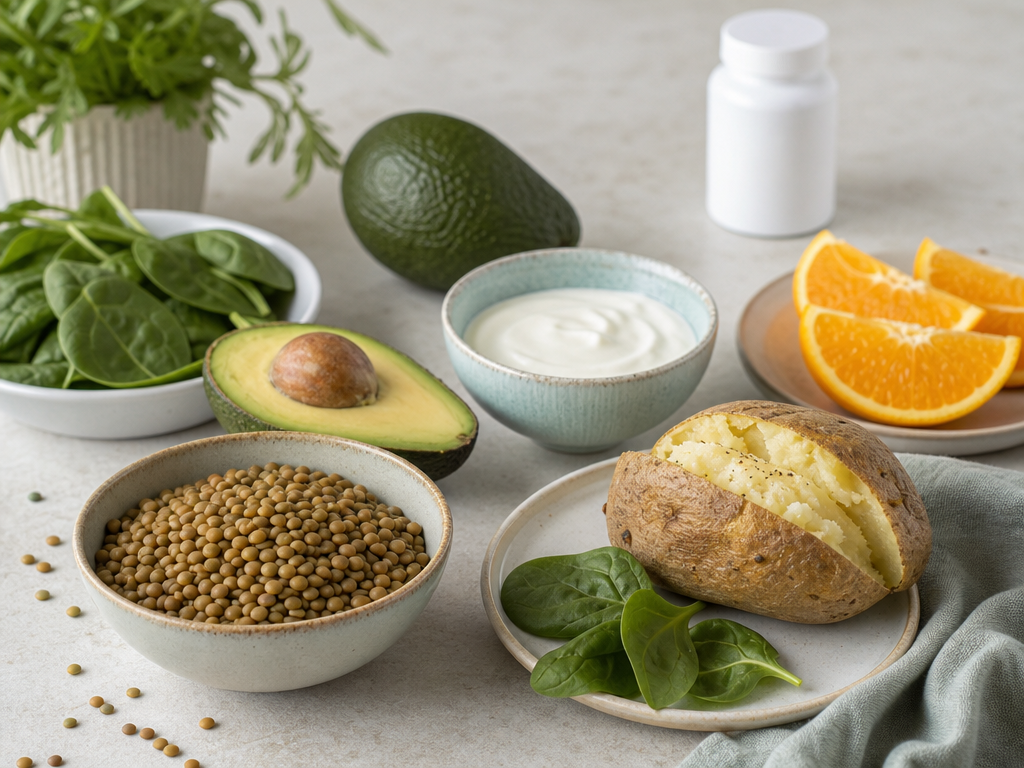
Few foods naturally contain it: fatty fish, fish liver oil, liver, egg yolk, and cheese. Some products are fortified. Skin produces it under UVB rays, but the amount depends on season, time of day, latitude, cloud cover, skin pigmentation, age, and clothing.

Extended, unprotected sun exposure to "make" vitamin D increases other risks, notably to the skin. The sun isn't a prescription.

04

D2 or D3?

Vitamin D2 (ergocalciferol) and vitamin D3 (cholecalciferol) both raise 25(OH)D. According to the NIH, D3 often raises blood levels more and for longer, which isn't enough on its own to set a dose or prove a clinical benefit.

On the label, check the form, the amount per drop or capsule, the unit (µg or IU), and whether vitamin D is present in other products. A high concentration per drop makes a dosing error easy, particularly in children.

05

What studies show on fractures

The 2014 Cochrane review pooled 53 trials and 91,791 participants, postmenopausal women and older men. Its conclusions are clear:

  • Vitamin D alone: high-quality evidence shows it's unlikely to prevent hip fractures or other fractures.
  • Vitamin D combined with calcium: a modest reduction in hip fracture risk, mainly seen in people living in institutions.
  • Adverse effects: hypercalcemia was more common in supplemented people, and a slight increase in kidney problems was observed.
06

Overdose: hypercalcemia and the kidneys

Excess vitamin D almost always comes from supplements. It causes hypercalcemia, meaning too much calcium in the blood, with nausea, vomiting, weakness, intense thirst, and frequent urination. In extreme cases, it can lead to kidney failure, calcifications, and heart rhythm disorders.

In 2023, EFSA set the upper limit at 100 µg (4,000 IU) per day for adults, including during pregnancy and breastfeeding, and 50 µg for ages 1 to 10. It identified excessive urinary calcium loss as the first sign of excess. Combining calcium and vitamin D in a supplement can increase certain adverse effects.

07

Medications and people at risk

According to the NIH, vitamin D can interact with orlistat, statins, corticosteroids, and thiazide diuretics. Advice is especially useful with kidney disease, a calcium disorder, a granulomatous disease such as sarcoidosis, malabsorption, pregnancy, older age, or taking several supplements.

08

A five-step method

  1. 01Clarify the question: symptom, test result, intake, prevention, or treatment.
  2. 02Take stock of sources: diet, fortified foods, medications, supplements.
  3. 03Check the form, unit, and amount per dose, without converting from memory.
  4. 04Ask whether testing is useful and how to interpret it.
  5. 05Reassess the dose and duration with the professional following you, without extending it on your own.

09FAQ

01Should you test your vitamin D every year? Not routinely. Whether testing is worthwhile depends on the situation and should be discussed with a professional.
02Is D3 preferable to D2? D3 often raises blood levels more, but that alone isn't enough to choose a dose or guarantee a benefit.
03Does vitamin D prevent fractures? Alone, no. Combined with calcium, it modestly reduces hip fracture risk, mainly in institutionalized older people.
04Can you aim for an "ideal level" by increasing the dose? No. Beyond actual needs, a higher dose provides no demonstrated benefit and exposes you to hypercalcemia.

Sources

Peer-reviewed studies and institutional references used for this article.

  1. 1EFSA· 2023
    Official guidelineEstablished

    tolerable upper intake level for vitamin D

    View source
  2. 2EFSA (European Food Safety Authority)· 2016
    Official guidelineEstablished

    nutritional reference values for vitamin D

    View source
  3. 3Avenell et al., Cochrane Database of Systematic Reviews· 2014
    Systematic reviewEstablished

    53 trials, 91,791 participants (postmenopausal women and older men) · 91791 participants

    View source

Comments0 comments

No comments yet. Be the first to react.

Sign in to leave a comment. Sign in