01
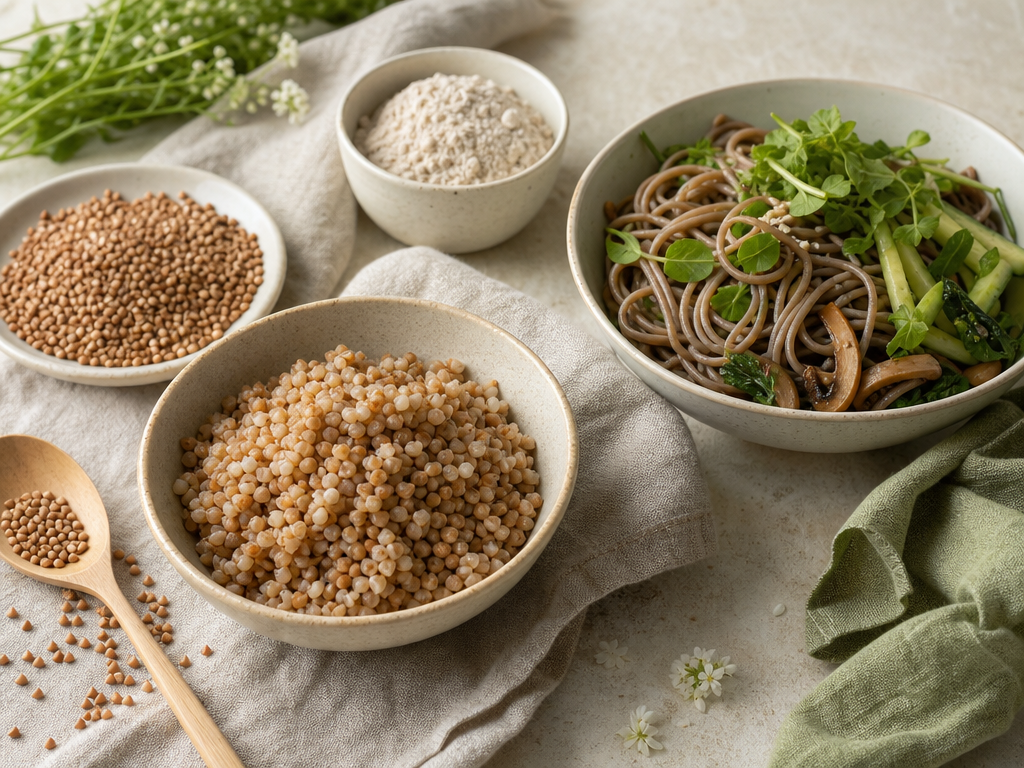
1. What it is Buckwheat is a seed related to rhubarb, used like a cereal. Pure buckwheat is gluten-free, but soba, bread and biscuits can contain wheat or cross-contact.
02
2. Nutrition USDA data for 100 g of cooked roasted groats report about 92 kcal, 19.9 g carbohydrate, 3.38 g protein, 2.7 g fibre, 51 mg magnesium, 70 mg phosphorus, 88 mg potassium and 0.8 mg iron. Values vary with water, variety and added ingredients.
03
3. Digestion and evidence A systematic review found 32 gastrointestinal studies, but only two human interventions and three observational studies. Human evidence is limited. Some trials reported changes in symptoms, while an observational study found an association between high noodle intake and irritable-bowel-type symptoms. Association does not prove causation.
04
4. Blood sugar and heart health Meta-analyses found interesting but inconsistent metabolic signals. A 2022 review included 16 human trials and 831 participants; only eight studies and 464 participants entered quantitative analyses. Trials were short and often small. Buckwheat is not a treatment for diabetes, cholesterol or high blood pressure, and no universal therapeutic dose is established.
05
5. Preparation Rinse groats. Toasting for two or three minutes is optional. Simmer until tender and drain if needed, following the package instructions. Use groats in salads, soups or with vegetables. Flour works in pancakes and bread but does not behave exactly like wheat flour. Soba may contain wheat. Combine buckwheat with vegetables and a protein food for a varied meal.
06
6. Allergy and safety Buckwheat can cause a genuine, sometimes severe allergy. Allergic proteins may remain reactive after cooking. Hives, swelling, breathing difficulty or collapse require urgent medical care. Coeliac disease and buckwheat allergy are different: a gluten-free product can still be unsafe for someone allergic to buckwheat.
07FAQ
01Is buckwheat a cereal? Botanically it is a seed or pseudocereal, but it is used like a cereal.
02Is it always gluten-free? The pure seed is gluten-free; processed products may contain wheat.
03Is it better than rice or oats? There is no universal winner. Compare portions, fibre, sodium, taste and tolerance.
Fontes
Estudos revistos por pares e referências institucionais usados neste artigo.
- 1WHO· 2026Recomendação oficialEstabelecido
general population
Ver a fonte - 2Tighe et al., Nutrients· 2023Revisão sistemáticaLimitado
humans, animals and in vitro studies · 1563 participantes
Ver a fonte - 3Li et al., Nutrients· 2022Revisão sistemáticaLimitado
adults; 831 participants across 16 trials · 831 participantes
Ver a fonte - 4Wieslander et al.· 2021Revisão sistemáticaLimitado
populations with buckwheat allergy
Ver a fonte - 5USDA FoodData Central· 2019Outra fonteEstabelecido
food composition database
Ver a fonte - 6Li et al., Nutrients· 2018Meta-análiseLimitado
human and animal studies
Ver a fonte
Comentários0 comentários
Ainda não há comentários. Sê o primeiro a reagir.
Inicia sessão para deixar um comentário. Iniciar sessão
Por
Claire Mercier
Registered nutritionist focused on whole-food diets and metabolic health.
Leitura relacionada
Alimentação integral
Como diversificar as fibras sem desconforto digestivo
Por Claire Mercier5 min de leitura46
Alimentação integral
Cacau e cozedura: preservar os flavanóis sem promessas excessivas
Por Claire Mercier5 min de leitura39
Alimentação integral
Sementes de chia ou linhaça: qual escolher?
Por Claire Mercier9 min de leitura170