
Nahrungsergänzung8 Min. Lesezeit
Selen: Bedarf, Nahrungsergänzung und Risiken
Selen ist lebenswichtig, doch das Spurenelement birgt Risiken. Ein Leitfaden zu Bedarf, Lebensmitteln, Präparaten und der schmalen Grenze zur Überdosierung.
DAS WESENTLICHE
Bevor es weitergeht.
Selen ist lebenswichtig, doch das Spurenelement birgt Risiken. Ein Leitfaden zu Bedarf, Lebensmitteln, Präparaten und der schmalen Grenze zur Überdosierung.
Artikel lesenSelen ist ein essenzielles Spurenelement: Der Körper braucht es täglich, aber nur in winzigen Mengen. Das Besondere an Selen ist der geringe Abstand zwischen der empfohlenen Zufuhr und einer potenziell schädlichen Dosis. Dieses schmale therapeutische Fenster macht eine unkontrollierte Einnahme von Nahrungsergänzungsmitteln, insbesondere die Kombination mehrerer Produkte, riskanter als bei vielen anderen Nährstoffen.
Wozu Selen dient
Der Bedarf: Zwei Referenzsysteme
Deckt die Ernährung den Bedarf?
Präparate: Formen, Dosierung und Auswahl
Selen und die Schilddrüse: Was die Studien zeigen
Krebs: Was die SELECT-Studie zeigte
Risiken: Überdosierung und Wechselwirkungen
Kurzer Check vor dem Kauf
09FAQ
01Sollte man Selen generell als Nahrungsergänzung nehmen? Nein, in der Regel nicht. Der Bedarf bezieht sich auf die Gesamtzufuhr, die eine abwechslungsreiche und ausgewogene Ernährung meistens deckt. Eine Supplementierung ist nur in spezifischen, mit Fachleuten abgeklärten Situationen sinnvoll, wie bei einem nachgewiesenen Mangel oder bei bestimmten Erkrankungen unter ärztlicher Aufsicht.
02Können Paranüsse ein Präparat ersetzen? Nein, sie sind keine zuverlässige Quelle. Der Selengehalt schwankt extrem, was eine genaue Dosierung unmöglich macht. Der regelmäßige Verzehr birgt ein erhebliches Risiko einer Überdosierung, insbesondere wenn Selen aus anderen Quellen hinzukommt.
03Hilft Selen der Schilddrüse? Selen ist für die Funktion der Schilddrüse essenziell. Bei Personen mit einer Autoimmunthyreoiditis (Hashimoto) und gleichzeitig niedrigem Selenstatus kann eine Supplementierung unter ärztlicher Aufsicht die Antikörperspiegel senken. Dies ersetzt jedoch keine Standardbehandlung und sollte niemals in Eigenregie erfolgen. Bei gesunder Schilddrüse bringt zusätzliches Selen keinen Vorteil.
04Benötige ich einen Bluttest, um meinen Selenstatus zu bestimmen? Ein Test ist nicht routinemäßig erforderlich. Er kann sinnvoll sein, wenn ein begründeter Verdacht auf einen Mangel oder eine Überdosierung besteht, z. B. bei bestimmten Erkrankungen oder Symptomen. Es gibt verschiedene Messmethoden (Selen im Vollblut/Serum, Aktivität der GPx, Selen in Haaren/Nägeln), deren Interpretation einer Fachperson obliegt.
05Woran erkenne ich zu viel Selen? Anhaltender Knoblauchatem, ein metallischer Geschmack, Übelkeit, unerklärlicher Haarausfall und brüchige Nägel sind deutliche Warnsignale. In diesem Fall sollte die Einnahme jeglicher Selenpräparate sofort beendet und ärztlicher Rat eingeholt werden.
Quellen
Peer-reviewte Studien und institutionelle Referenzen für diesen Artikel.
- 1ANSES· 2025Wahrscheinlich
French population
Quelle ansehen - 2NIH Office of Dietary Supplements· 2024Gesichert
general population
Quelle ansehen - 3NIH Office of Dietary Supplements· 2024Gesichert
adults and clinical contexts
Quelle ansehen - 4EFSA NDA Panel· 2023Gesichert
European adults
Quelle ansehen - 5EFSA NDA Panel· 2014Wahrscheinlich
European adults and life stages
Quelle ansehen - 6Klein et al., JAMA· 2011Begrenzt
men in SELECT trial · 35533 Teilnehmende
Quelle ansehen
Kommentare0 Kommentare
Noch keine Kommentare. Reagiere als Erster.
Melde dich an, um einen Kommentar zu hinterlassen. Anmelden
Empfehlung der Redaktion
Weiterlesen
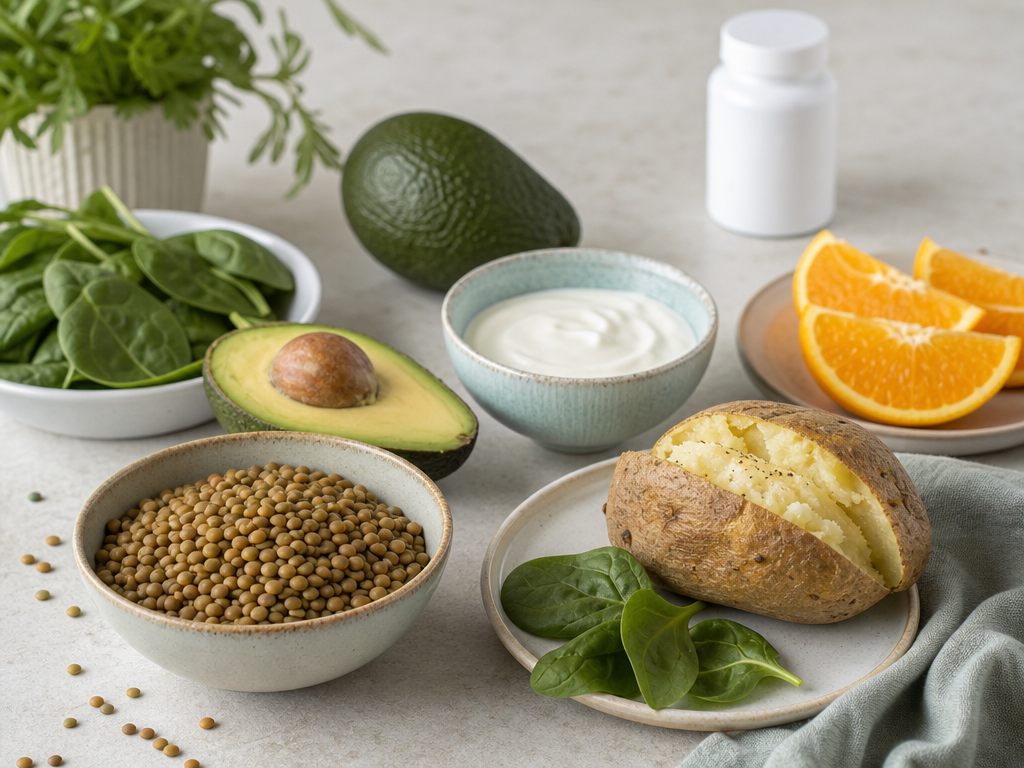
Kalium als Supplement: Bedarf, Quellen und Hyperkaliämie-Risiko
Kalium als Supplement: Lebensmittelquellen, Hypokaliämie, Hyperkaliämie, Nieren, Diuretika, ACE-Hemmer/ARB, Wechselwirkungen und Vorsicht.
Von Claire Mercier8 Min. Lesezeit548
Kupfer: Bedarf, Supplemente und Risiken eines Überschusses
Kupfer ist essenziell, doch mehr ist nicht automatisch besser. Bedarf, Lebensmittel, Mangel, Formen, Obergrenzen und Morbus Wilson.
Von Claire Mercier10 Min. Lesezeit536
Vitamin A als Supplement: Formen, Bedarf, Risiken und Schwangerschaft
Retinol, Betacarotin, Leber, Multivitamine, Schwangerschaft: Vitamin A verlangt eine genaue Etikettenlektüre. Das Risiko entsteht vor allem durch die Summe vorgeformter Vitamin-A-Quellen.
10 Min. Lesezeit434